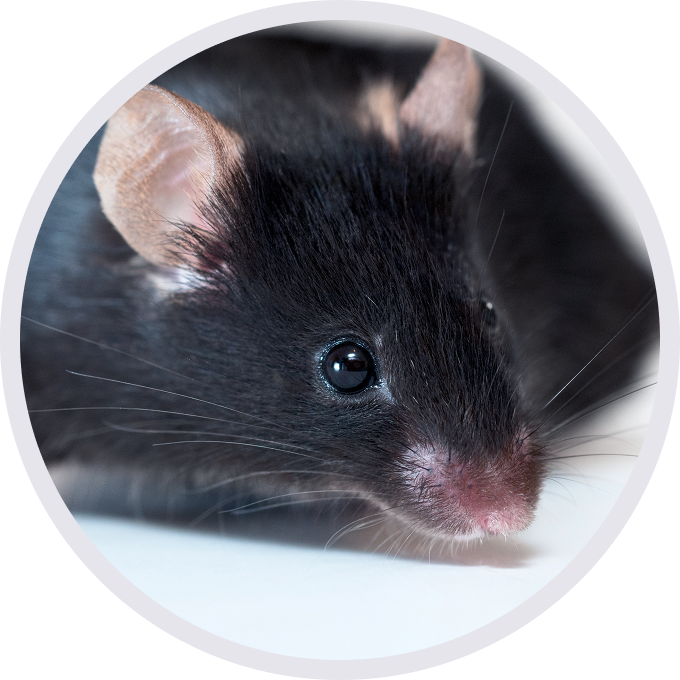
C57BL/6N-Pdcd1tm2(PDCD1)Bcgen/Bcgen • 112165
| Product name | B-hPD-1 mice ad |
|---|---|
| Catalog number | 112165 |
| Strain name | C57BL/6N-Pdcd1tm2(PDCD1)Bcgen/Bcgen |
| Strain background | C57BL/6N |
| NCBI gene ID | 5133 (Human) |
| Aliases | PD1; PD-1; CD279; SLEB2; hPD-1; hPD-l; hSLE1; ADMIO4; AIMTBS |


Gene targeting strategy for B-hPD-1 mice ad. The CDS that encode human PD-1 signal peptide, extracellular domain, transmembrane and cytoplasmic domain is inserted right after mouse PD-1 ATG to replace the mouse PD-1 gene. The human PD-1 protein expression will be driven by endogenous mouse PD-1 promoter, while mouse PD-1 gene transcription and translation will be disrupted.

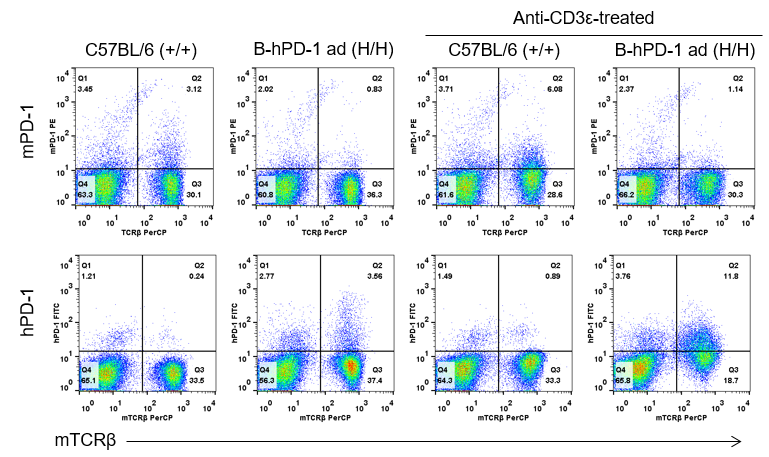
Strain specific PD-1 ad expression analysis in wild-type C57BL/6 mice and homozygous humanized B-hPD-1 mice ad by flow cytometry. Splenocytes were collected from wild-type C57BL/6 mice (+/+) and homozygous B-hPD-1 mice ad (H/H) stimulated with or without anti-mouse CD3ε antibody (7.5 μg/mice, i.p.) in vivo for 24 hrs (female, 10-week-old, n=1). Protein expression was analyzed with anti-mouse PD-1 antibody (Biolegend, 329904) and anti-human PD-1 antibody (Biolegend, 109104) by flow cytometry. Mouse PD-1 was only detectable in wild-type C57BL/6 mice. Human PD-1 was exclusively detectable in homozygous B-hPD-1 mice ad, but not in wild-type C57BL/6 mice.

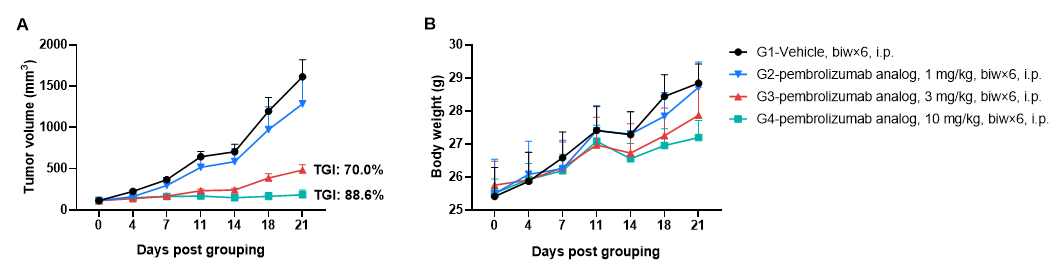
Antitumor activity of anti-human PD-1 antibody (pembrolizumab analog, in-house) in B-hPD-1 mice ad. (A) Anti-human PD-1 antibody inhibited MC38 tumor growth in B-hPD-1 mice ad. Murine colon cancer MC38 cells (5×10⁵) were subcutaneously implanted into homozygous B-hPD-1 mice ad (male, 7-week-old, n=7). Mice were grouped when tumor volume reached approximately 100-150 mm3, at which time they were intraperitoneally injected with anti-human PD-1 antibodies indicated in panel. (B) Body weight changes during treatment. As shown in panel A, anti-human PD-1 antibody was efficacious in controlling tumor growth in B-hPD-1 mice ad, demonstrating that the B-hPD-1 mice ad provides a powerful preclinical model for in vivo evaluation of anti-human PD-1 antibodies. Values are expressed as mean ± SEM.
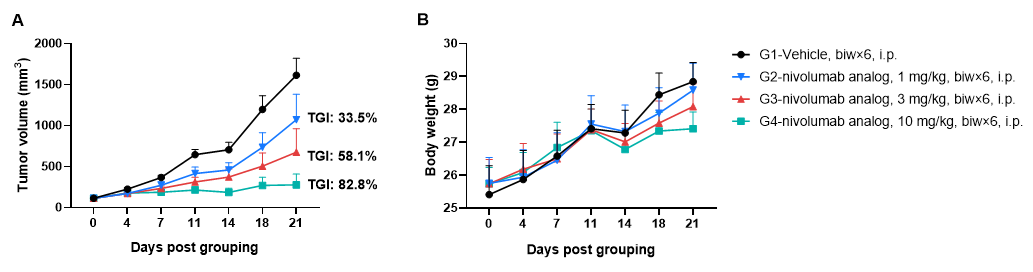
Antitumor activity of anti-human PD-1 antibody (nivolumab analog, in-house) in B-hPD-1 mice ad. (A) Anti-human PD-1 antibody inhibited MC38 tumor growth in B-hPD-1 mice ad. Murine colon cancer MC38 cells (5×10⁵) were subcutaneously implanted into homozygous B-hPD-1 mice ad (male, 7-week-old, n=7). Mice were grouped when tumor volume reached approximately 100-150 mm3, at which time they were intraperitoneally injected with anti-human PD-1 antibodies indicated in panel. (B) Body weight changes during treatment. As shown in panel A, anti-human PD-1 antibody was efficacious in controlling tumor growth in B-hPD-1 mice ad, demonstrating that the B-hPD-1 mice ad provides a powerful preclinical model for in vivo evaluation of anti-human PD-1 antibodies. Values are expressed as mean ± SEM.